01 — Sam Okafor
Number Go Up
Idle games are the most honest genre we have: nothing happens, constantly, and forty million of us cannot stop watching.
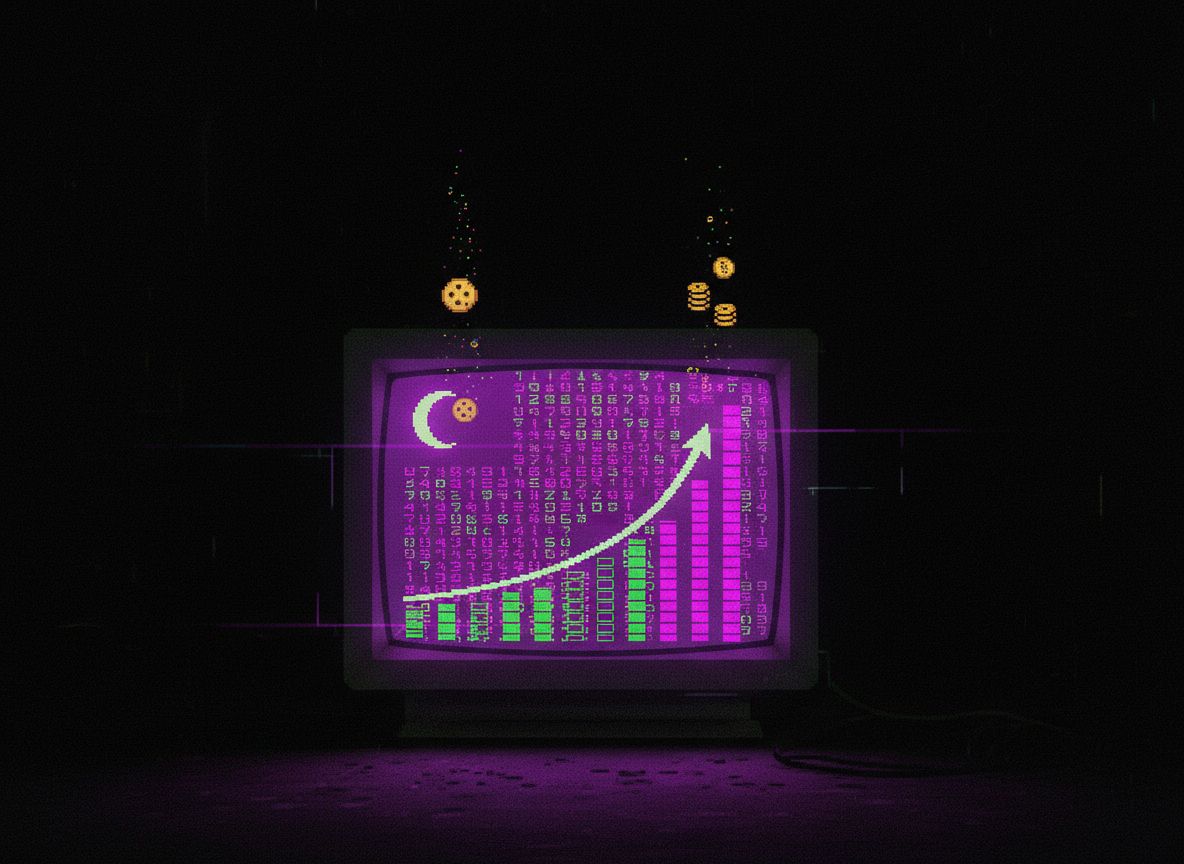
Somewhere on your phone right now, a number is getting bigger. You are not touching the phone. That is the point. Since Cookie Clicker escaped from a French developer's weekend joke in 2013, the idle game has quietly become the most played — and least discussed — genre in the world.
The design orthodoxy says games are about meaningful choices. Idle games commit heresy: they remove the choices and keep the meaning. What remains is the purest loop in game design — accumulate, spend, automate, transcend. Every idle game is a tiny economics lecture wearing a party hat.
An idle game is a spreadsheet that has learned to love you back.
The genius is in the prestige mechanic. Just as the numbers get absurd — your cookie empire producing quattuordecillions per second — the game invites you to burn it all down and start again, slightly faster. It is grief and rebirth on a 40-hour cycle, and players describe the reset not with frustration but with something close to relief.
For indie developers the lesson is uncomfortable but useful: your players' attention is not the only resource you can design for. Their absence is a mechanic too. The best idle games make being away feel like play — and there is no reason your roguelike, your farming sim, or your narrative game can't steal that trick.